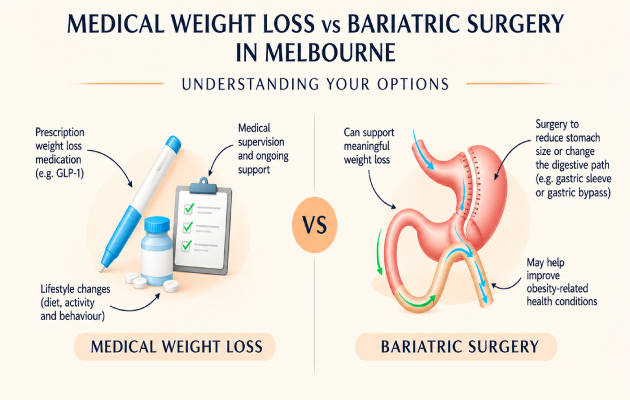

If you’re considering weight loss medication or bariatric surgery, it helps to understand what each option involves and what ongoing care looks like. Both can help people living with obesity manage their weight and improve their health. The choice depends on your medical history, any weight-related conditions, your previous treatment experience and what you want to achieve.
Medical weight loss combines nutrition, physical activity and behavioural support with prescription medication when appropriate. Bariatric surgery changes the stomach and, in some procedures, how food passes through the small intestine. Medication often continues long term, while surgery involves a recovery period followed by lifelong nutritional monitoring and follow-up.
What is medical weight loss?
Medical weight loss is a doctor-led approach. Your GP or treating doctor reviews your health, current medicines and previous weight management efforts before discussing a plan. This may include working with a dietitian, making changes to eating and activity habits, and using prescription medication if it’s suitable for you.
Some weight loss injections help reduce appetite and increase feelings of fullness. Clinical trials have shown meaningful weight loss with these medicines, although results vary. Regular reviews help your doctor assess how well treatment is working, how you’re tolerating it and whether to continue.
Learn more about our weight loss clinic in Melbourne.
What does bariatric surgery involve?
Common procedures include gastric sleeve surgery and gastric bypass surgery. A gastric sleeve removes part of the stomach, leaving a smaller, sleeve-shaped stomach. A gastric bypass creates a smaller stomach pouch and redirects food past part of the small intestine. Both procedures can help you feel full after eating smaller amounts.
Each procedure has its own benefits and risks. Your surgeon will discuss what to expect during recovery and how your eating habits will need to change. Long-term care includes regular blood tests, vitamin and mineral supplements, and follow-up with your healthcare team.
At Mr. Niruben Rajasagaram’s practice, your care may include support from Ms Stefania Basso, bariatric dietitian, and Dr Monica Devanand, habits and transformation coach. Meet the team.
How do weight loss medication and bariatric surgery compare?
|
Weight loss medication |
Bariatric surgery |
|
|
What treatment involves |
Prescription medication alongside nutrition, physical activity and behavioural support |
An operation, a recovery period and changes to how you eat |
|
What to consider |
Side effects such as nausea, how well the medicine works for you and whether you can continue taking it |
The risks of the operation and the potential for longer-term complications |
|
What follow-up looks like |
Regular medical reviews to assess benefits, side effects and whether to continue treatment |
Lifelong follow-up, blood tests, and vitamin and mineral supplementation |
|
What can happen over time |
Weight regain is common after stopping medication |
Weight regain can also occur after surgery and may prompt a review of your treatment plan |
The benefits, risks and ongoing commitments vary with the medication or procedure and your individual circumstances.
Who may be suitable for bariatric surgery?
A surgical assessment considers your body mass index (BMI) alongside your overall health. Our practice generally considers gastric sleeve surgery for adults with a BMI over 35, or over 30 when weight-related health conditions are present. Your surgeon will also consider conditions such as type 2 diabetes and sleep apnoea, as well as reflux symptoms, previous treatments, surgical risks and your ability to manage long-term follow-up.
Read more about gastric sleeve eligibility or use our BMI calculator.
Can weight loss medication be used after bariatric surgery?
Yes, in selected cases. If weight loss has levelled off or weight has returned after surgery, your treating team can assess what may be contributing and discuss whether medication is appropriate. That review may include your eating patterns, nutritional status and any symptoms related to your original procedure. In some cases, your surgeon may also discuss revisional bariatric surgery.
Frequently asked questions
Do weight loss injections work as well as surgery?
Both can lead to meaningful weight loss. The comparison depends on the specific medication or operation, how long treatment continues and which outcomes matter most to you. Your doctor can help you compare the expected benefits, risks and follow-up for your circumstances. You need to be aware of the side effects of malnutrition and muscle loss.
What happens if I stop weight loss medication?
Weight regain is common after stopping, although the amount varies. If you’re thinking about stopping because of side effects, cost or another concern, your prescribing doctor can help you plan how to manage your weight afterwards.
How long will I need to take weight loss medication?
Treatment is often long-term. Your doctor will review whether the medication is helping you meet your health goals, how well you tolerate it and whether it remains suitable for you. This often involves a lifelong journey.
Do I need to try medication before considering surgery?
No, you don't need to, as both are weight loss tools. You can discuss surgery with your GP or surgeon even if you haven’t taken weight loss medication. Your previous treatment experience is one part of the assessment, alongside your health, goals and the risks and benefits of each option.
Discuss your weight loss options in Melbourne
If you are considering weight loss surgery in Melbourne, a consultation with Mr. Niruben Rajasagaram can help you understand the available procedures and what each may involve. You can discuss your health concerns, recovery expectations and long-term care before deciding on the next step.