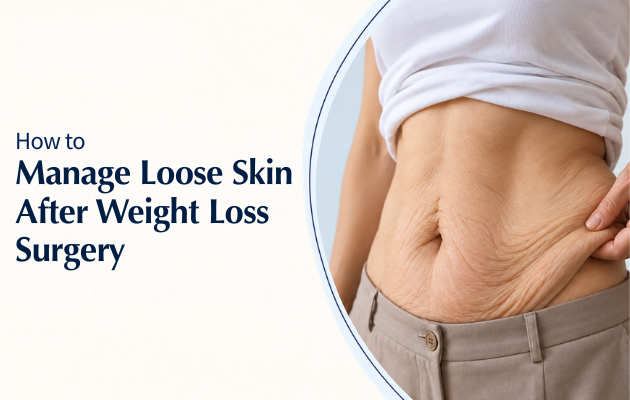

Loose skin after weight loss surgery is common, and how much you get depends on how much weight you lose, how fast you lose it, your age and your genes. Mild loose skin may improve gradually during the first 12 to 18 months after significant weight loss.
This is something Mr. Niruben Rajasagaram talks through with patients when planning surgery, so loose skin doesn't catch them off guard later.
In this blog, we cover why loose skin happens, whether it goes away on its own, what exercise can and can't do, when skin removal is possible, and whether Medicare or insurance may help with the cost.
What Causes Loose Skin After Rapid Weight Loss?
Skin contains collagen and elastin fibres that allow it to stretch and, to a degree, spring back.
When weight has been carried for a long period, or when weight loss occurs relatively quickly, as it can after gastric sleeve or gastric bypass surgery, those fibres may not fully return to their previous elasticity after significant or prolonged stretching.
Age, genetics, the total amount of weight lost, and how long the extra weight was carried all influence how much loose skin an individual is likely to experience. This is a normal physiological response to major weight change, not a sign that anything has gone wrong with the surgery itself.
Does Loose Skin Go Away on Its Own After Weight Loss Surgery?
For some patients, particularly when there is only a small amount of excess skin, the skin may gradually retract to some degree.
For others, particularly after substantial weight loss, some degree of loose skin, especially around the abdomen, arms or thighs, tends to persist regardless of how much time passes, and body contouring after weight loss surgery becomes the more realistic option for improving shape and comfort.
Loose Skin After Gastric Sleeve: What to Expect
Loose skin after gastric sleeve surgery follows the same general pattern as after other bariatric procedures, since it depends on the amount and speed of weight loss rather than the specific operation performed.
Patients who lose a larger percentage of their starting weight, or who lose it over a shorter period, tend to notice more excess skin, most commonly around the abdomen. Discussing expectations around skin changes as part of pre-surgical planning helps patients feel less caught off guard by this stage of recovery.
Can Exercise Prevent Loose Skin After Gastric Sleeve?
Exercise cannot fully prevent loose skin, but it can help. Resistance training can build muscle beneath areas of loose skin and may improve overall body shape and function, although it cannot remove excess skin or restore its original elasticity.
Staying well hydrated and maintaining a steady, gradual rate of weight loss where possible are also commonly recommended, though neither guarantees a particular outcome, since genetics and the extent of weight change play a significant role too.
A few factors that influence how much loose skin a person experiences include:
-
Total amount of weight lost and how quickly it occurred
-
Age and natural skin elasticity
-
Genetics and skin type
-
Whether resistance training was included during the weight loss period
-
Duration the extra weight was carried before surgery
How Long After Bariatric Surgery Can You Get Skin Removal?
Most guidance suggests waiting until weight has been stable for at least six months, which is often around twelve to eighteen months after the original bariatric procedure, before considering skin removal surgery.
This allows the body to complete its major changes so ongoing weight fluctuation doesn't undermine surgical results. The right timing varies by individual and is decided with a treating surgical team.
Is Skin Removal Surgery Covered by Medicare or Insurance?
Coverage for skin removal surgery in Australia is assessed case by case and is not automatic. Medicare Benefits Schedule information outlines requirements for procedures such as panniculectomy and radical abdominoplasty. These procedures may require that weight has remained stable for at least six months.
They may also require substantial documented weight loss and ongoing skin-related symptoms.
Examples include recurrent rashes, infections or skin breakdown that have not improved with non-surgical treatment.
Private health insurance may also contribute in some circumstances, again subject to policy terms and individual assessment. Nobody should assume coverage without a specific assessment against current MBS criteria and their own policy.
Why Patients Choose Mr. Niruben Rajasagaram
Loose skin can be discussed as part of your longer-term weight loss journey. As a weight loss specialist and bariatric surgeon, Mr. Niruben Rajasagaram can discuss your concerns, assess whether further treatment may be appropriate and, where needed, explain referral options for body contouring or skin removal procedures.
With three convenient Melbourne locations and a multidisciplinary team that includes a bariatric dietitian and habits coach, patients have a realistic, grounded place to ask what comes next, including honest guidance on skin removal options and referral pathways where appropriate.
Conclusion
Loose skin after weight loss surgery is a normal, expected part of significant weight change for many patients and is influenced by age, genetics, and how much and how quickly weight was lost. Some improvement can occur naturally over twelve to eighteen months, while more noticeable excess skin may call for a conversation about body contouring or skin removal surgery once weight is stable.
This article provides general information only and is not personalised medical advice, and coverage or eligibility for any skin removal procedure should always be confirmed individually with your treating team and insurer.
If loose skin is affecting your comfort or confidence after weight loss surgery, book a consultation with Mr. Niruben Rajasagaram's team at Wantirna, Frankston or Berwick to discuss your options.
Contact us to book an appointment!