
Hiatal hernia surgery is a significant step towards improving digestive health and overall comfort. While the procedure itself is designed to correct hernias and prevent complications like acid reflux and discomfort, your recovery and long-term health largely depend on how you manage life after hiatal hernia surgery. Following proper guidance from hiatal hernia specialists and adopting healthy habits can make a noticeable difference in your recovery and quality of life.
In this blog, we will explore essential do’s and don’ts to ensure a smooth recovery and a healthier life after hiatal hernia surgery. We will also address common concerns, such as when you can walk after hernia surgery, when you can drive, and whether lingering pain is normal months after the procedure.
Understanding Life After Hiatal Hernia Surgery
Life after hiatal hernia surgery requires adjustments to your daily routine, diet, and physical activity. This recovery phase is essential, as it helps prevent complications, improves healing, and allows you to return to your normal lifestyle safely. Each patient’s recovery may vary, so it’s essential to follow the advice of hiatal hernia specialists who understand your specific condition.
Most patients can expect gradual improvement in their symptoms within a few weeks. However, some discomfort or mild pain can persist, which is often normal. Knowing what to do and what to avoid can significantly affect your long-term results.
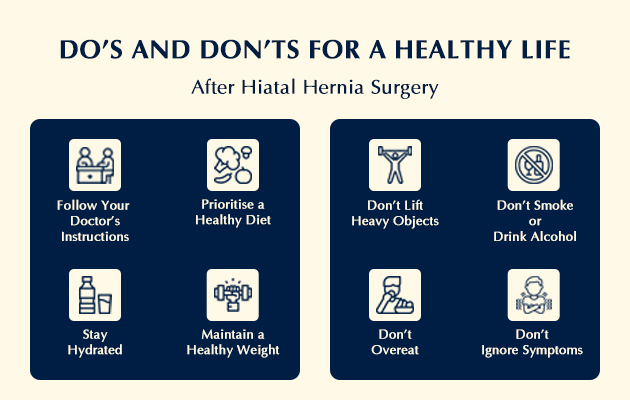
Do’s After Hiatal Hernia Surgery
1. Follow Your Doctor’s Instructions Carefully
Your surgeon will provide detailed instructions regarding medication, diet, and activity. Following these guidelines precisely ensures optimal healing and reduces the risk of complications.
2. Prioritise a Healthy Diet
Eating the right foods plays an essential role in recovery. Focus on small, frequent meals to avoid putting pressure on the stomach. Soft, easily digestible foods like soups, smoothies, lean proteins, and cooked vegetables are ideal. Avoid spicy, fatty, or acidic foods initially, as they can trigger discomfort or reflux.
3. Stay Hydrated
Drinking enough water helps with digestion and overall healing. Aim for small sips throughout the day rather than large amounts at once, which can cause bloating.
4. Gentle Physical Activity
Physical activity is essential for recovery, but it should be gradual. Walking is encouraged soon after surgery to prevent blood clots and promote circulation. For most patients, walking a few minutes multiple times a day can be started immediately after surgery, but always consult your hiatal hernia specialists for personalised guidance.
5. Manage Pain Appropriately
Mild pain or discomfort is common after hiatal hernia surgery. Use prescribed medications as directed and apply gentle techniques, such as warm compresses, if recommended. Never ignore severe or persistent pain, as it could indicate complications.
6. Maintain a Healthy Weight
Excess weight can put additional pressure on your stomach and surgical site. Focus on a balanced diet and regular, gentle exercise to maintain a healthy weight, reducing the risk of recurrence or complications.
7. Keep Follow-Up Appointments
Regular follow-ups with your hiatal hernia specialists are essential. These visits allow your doctor to monitor your healing, address any concerns, and adjust medications or recommendations as needed.
Don'ts After Hiatal Hernia Surgery
1. Don’t Lift Heavy Objects
Avoid lifting anything heavy for at least 4–6 weeks after surgery. Straining can damage the surgical site and increase the risk of recurrence.
2. Don’t Ignore Symptoms
Persistent nausea, vomiting, severe pain, or difficulty swallowing may indicate complications. Contact your hiatal hernia specialist immediately if you experience any of these symptoms.
3. Don’t Overeat
Overeating puts pressure on your stomach and surgical site, potentially causing discomfort or complications. Stick to small, balanced meals and eat slowly.
4. Don’t Smoke or Drink Alcohol
Smoking and alcohol can interfere with healing and exacerbate digestive issues. Avoid these entirely during your recovery period.
5. Don’t Resume Strenuous Exercise Too Soon
Avoid vigorous workouts, weightlifting, or activities that strain your abdomen until your doctor clears you. Premature activity can slow healing and increase pain.
6. Don’t Drive Too Early
Many patients ask, “How soon can you drive after hernia surgery?” Generally, driving is safe once you are off strong pain medications and can comfortably move your body without strain. This typically takes a couple of weeks, but always confirm with your hiatal hernia specialists.
7. Don’t Hesitate to Seek Help
If you feel unsure about your recovery, pain levels, or lifestyle adjustments, reach out to your hiatal hernia specialists. Early intervention can prevent complications and promote a smoother recovery.
Common Questions About Recovery
How Soon Can I Walk After Hernia Surgery?
Most patients are encouraged to start walking within 24–48 hours post-surgery, as gentle movement improves circulation and reduces the risk of blood clots. Walking should be light, with gradual increases in distance and duration as tolerated.
Is It Normal to Have Pain Months After Hernia Surgery?
Mild discomfort or occasional soreness can persist for weeks to months after surgery. This is typically normal as your body continues healing, but any severe, sharp, or worsening pain should be reported to your surgeon.
How Soon Can You Drive After Hernia Surgery?
Driving is generally safe once you can move comfortably, are off prescription pain medications that impair alertness, and can react quickly. For most patients, this is around 2–3 weeks post-surgery, but always confirm with your doctor.
Why You Should Choose Us
Recovering successfully from hiatal hernia surgery requires expert care and guidance. Choosing the right team of hiatal hernia specialists ensures you receive accurate advice, timely follow-ups, and personalised recommendations for your life after hiatal hernia surgery.
At Dr Niruben Rajasangram’s clinic, we focus on:
-
Tailored Recovery Plans: Every patient receives a recovery plan suited to their health, lifestyle, and type of surgery.
-
High volume centre for hiatal hernia surgery
-
Expert Surgical Care: Our team has extensive experience performing hiatal hernia surgeries with minimal complications.
-
Comprehensive Post-Operative Support: From diet advice to activity guidelines, we provide continuous guidance to ensure a safe, smooth recovery.
-
Patient Education: We empower patients to understand what to do and what to avoid after surgery, making them active participants in their healing.
By choosing experienced specialists, you not only address immediate post-surgery needs but also lay the foundation for long-term digestive health and comfort.
Takeaway
Life after hiatal hernia surgery involves careful attention to diet, activity, and overall well-being. By following these simple do’s and don’ts, you can promote a smooth recovery, reduce the risk of complications, and enjoy long-term digestive health. Remember to:
- Follow your surgeon’s instructions carefully
- Start a gentle activity like walking, as suggested
- Maintain a healthy diet and stay hydrated
- Avoid heavy lifting, high-impact exercise, smoking, and alcohol
- Monitor your symptoms and attend follow-up appointments
With the right approach and guidance from trusted hiatal hernia specialists, a healthy, active life after surgery is achievable. Prioritise recovery, listen to your body, and take small, consistent steps towards long-term wellness.
Frequently Asked Questions
1. How long does it take to fully recover from hiatal hernia surgery?
Recovery varies for each patient, but most people notice significant improvement within 4–6 weeks. Full recovery, including return to normal activities, may take a few months, depending on your overall health and adherence to post-surgery guidelines.
2. What foods should I avoid after hiatal hernia surgery?
Avoid spicy, fatty, or acidic foods initially, as these can cause discomfort or trigger reflux. Stick to soft, easily digestible foods like soups, smoothies, lean proteins, and cooked vegetables. Small, frequent meals are recommended.
3. Can I experience pain months after surgery?
Some mild discomfort or occasional soreness is normal for weeks to months after surgery as your body continues healing. Persistent, severe, or worsening pain should be discussed with your hiatal hernia specialists immediately.
4. When can I start exercising after hiatal hernia surgery?
Gentle activity like walking can begin within 24–48 hours post-surgery. Strenuous exercise, weightlifting, or high-impact activities should be avoided until cleared by your doctor, usually after a few weeks.
5. Is it safe to drive after hiatal hernia surgery?
Driving is generally safe once you are off strong pain medications, can move comfortably, and react quickly. Most patients are ready to drive about 2–3 weeks after surgery, but always confirm with your surgeon.
6. What should I do if I notice unusual symptoms?
Persistent nausea, vomiting, severe pain, or difficulty swallowing may indicate complications. Contact your hiatal hernia specialists immediately if you experience any of these symptoms.
7. How can I ensure the best long-term results after surgery?
Following your surgeon’s instructions, maintaining a healthy diet, staying hydrated, gradually increasing physical activity, avoiding heavy lifting, and attending follow-up appointments all contribute to a smoother recovery and better long-term health.
8. Do I need follow-up appointments after surgery?
Yes, regular follow-ups are essential for monitoring healing, adjusting medications, and addressing any concerns. They help ensure a safe and successful recovery.